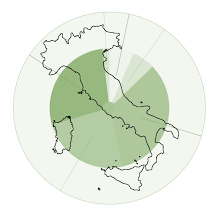
Life expectancy is growing in Italy, but the burden of disease is increasing, with significant regional differences in health status and care expectations. This is certified by a study of the Italian Global Burden of Disease Initiative coordinated by IRCCS “Burlo Garofolo.”
The important paper, published today in the prestigious scientific journal “Lancet Public Health,” has Dr. Giulia Zamagni as first author and Dr. Lorenzo Monasta as senior author, both from the Clinical Epidemiology and Health Services Research of the Trieste-based Irccs
An analysis conducted by the Italian GBD Initiative network, coordinated at the national level by the Irccs “Burlo Garofolo” of Trieste, on the evolution of the burden of disease in Italy from 2000 to 2021, based on estimates from the Global Burden of Disease Study 2021, an international research project that comprehensively assesses the state of health of people worldwide, was published today in the scientific journal Lancet Public Health (State of health and inequalities among Italian regions from 2000 to 2021: a systematic analysis based on the Global Burden of Disease Study 2021 – ScienceDirect). The article has Dr. Giulia Zamagni as first author and Dr. Lorenzo Monasta as senior author, both of Burlo’s Clinical Epidemiology and Health Services Research
.
The study showed a steady improvement in population health through 2019. However, the Covid-19 pandemic interrupted this trend, leading to a reduction in life expectancy and an increase in the burden of disease, both in terms of mortality and morbidity. Moreover, the analysis reveals significant regional differences, with the North showing more favorable health indicators than the South and the Islands.
In particular, in the years prior to the pandemic, life expectancy at birth in Italy increased steadily from 79.6 to 83.4 years between 2000 and 2019. With the pandemic, there was a decline to 82.2 years in 2020, followed by a partial recovery in 2021, with a value
of 82.7 years. A similar trend was observed for healthy life expectancy, reaching 70.9 years in 2021, highlighting the growing challenge of ensuring quality aging.
The study then pointed out that, between 2000 and 2019, years of life lost due to deathprematurely decreased significantly, mainly due to advances in the treatment of cardiovascular and oncological diseases. However, in 2020, the Covid-19 emergency reversed this trend, leading to a major increase in life years lost, followed by a slight reduction in 2021, but without an actual return to pre-pandemic levels. Another notable finding is the dramatic increase in Alzheimer’s mortality, which has risen by more than 50 percent since 2000, a phenomenon mainly related to the aging of the population.
At the same time, the number of years lived with disability has continued to increase, with chronic diseases such as diabetes and mental illnesses having a major impact. Before the pandemic, there was a slight decrease in disability related to depressive disorders and an increase in that for
anxiety disorders, but between 2019 and 2021, the years of life lived with disability due to both anxiety and depression increased by up to 20 percent, highlighting the strong psychological impact of Covid.
Dwelling, then, on health and care in different regions of Italy, the study confirmed the existence of important differences in health between different areas of the country. Despite the fact that northern regions are characterized by an older population than the South and Islands, in fact,
they continue to show higher life expectancy and better overall health status.
This suggests that the quality and accessibility of health services play a crucial role in determining population health outcomes. Analysis of the estimates shows that the South faces a more fragile health care system with a lower capacity to respond to the needs of the
population. In addition, in Northern Italy, many families try to make up for the shortcomings of the National Health Service by resorting to private expenditures, while in the South and Islands this happens less, increasing the risk of insufficient access to essential care.
The pandemic has, then, amplified pre-existing criticalities in the health care system, making the need for structural reforms aimed at ensuring equitable access to care throughout the country even more urgent. It is imperative to invest in upgrading health infrastructure, with
a focus on the most disadvantaged areas, and to strengthen chronic disease prevention strategies. However, the challenge is not limited to physical health: the sharp increase in mental disorders makes it imperative to consider mental health a top priority.
“These results,” says Giulia Zamagni, author of the study, “show that Italy has a high life expectancy, but living long does not necessarily mean living well. The main challenge for our country is to reduce health inequalities between different areas, ensuring healthy and quality aging for all.”
For his part, Dr. Lorenzo Monasta, author of the study and national coordinator of the Italian GBD Initiative, emphasizes, “The burden due to population aging certainly weighs more heavily on some northern regions such as Liguria and Friuli Venezia
Giulia. However, the analysis of the burden of disease shows that on the regions of the South and Islands there is a greater burden on the entire population that, although younger, is more exposed to behavioral risk factors and greater difficulty in accessing services.”